Contact details
Personal Social Services Research Unit (PSSRU)
London School of Economics and Political Science
Department of Health Policy
Houghton Street
London WC2A 2AE
Email: j.marczak@lse.ac.uk
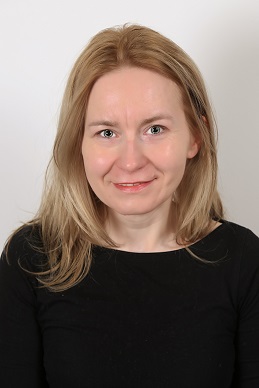
Dr Joanna Marczak
|
Personal Social Services Research Unit (PSSRU)
London School of Economics and Political Science Email: j.marczak@lse.ac.uk |
|
Dr Joanna Marczak is a researcher at the London School of Economics and Political Science (LSE), specialising in interdisciplinary research on care work, family, gender equity and migration.
Joanna's research draws on social policy, social psychology, economics, sociology, feminism and migration to bring new and unique insights into such issues as migration within European Union, low fertility in modern societies, relative poverty and advantage in an interconnected Europe. Joanna's multidisciplinary work have included qualitative research, teaching English in Poland and Norway, and managing international research projects collaborating with European policy makers and international organizations such as WHO, OECD, Age Platform Europe, Eurocarers to organize knowledge exchange activities.
Education
2009-2013 PhD in Social Policy, London School
of Economics
Thesis title: Comparative analysis of childbearing intentions of Polish parents
in Poland and the UK – progression to the second child
2007-2008 MA in International Studies
(distinction), The University of Leeds
Courses included: International Political Economy, Theoretical Approaches to
International Relations, Research Methods, and Gender and Development
1997-2001 BA in English, State Vocational Higher Education School in
Poland
Courses included: English Literature, American Literature, Methodology of Teaching, Applied
Linguistics, Translations, Psychology
Awards/Grants
2015 NIHR School for Social Care Research (NIHR SSCR) Developing local evaluation frameworks for assessing prevention effects in social care (co-applicant)
2015 European Social Fund, European Commission, Network on quality and cost-effectiveness in long-term care and dependency prevention (co-applicant)
2012 LSE Research Studentship: PhD tuition fee & part of living expenses
2009-2012 Titmuss Meinhardt Award: PhD tuition fee & full living expenses
2010-2011-2012 BSPS student bursary to attend the annual conference
Selected Publications
· Marczak, J. Sigle, W. Coast. E. (2018). When the grass is greener: fertility decisions in a cross-national context. Population Studies: A Journal of Demography.
Marczak, J. (2018) The Care Act 2014 in England. Zdrowie Publiczne i Zarzadzanie (Public Health and Management)
• Marczak, J. Fernandez, JL, Wittenberg, R. (2017) Quality and cost-effectiveness in long-term care and dependency prevention: English policy landscape. CEQUA report
Fernández JL, Snell T, Marczak J (2016). An assessment of the impact of the Care Act 2014 eligibility regulations PSSRU discussion paper, DP2905. Personal Social Services Research Unit, London
Marczak, J. & Wistow G. (2015). Commissioning Long – term care in OECD countries. In J.L. Fernandez, C. Gori & R. Wittenberg Long-Term Care Reforms in OECD Countries: Successes and Failures, Bristol: Policy Press
Fernández J.L, Snell T, Marczak J (2014). Evaluation of the June 2014 Draft National Minimum Eligibility Criteria for Social Care. Personal Social Services Research Unit, PSSRU Discussion Paper DP2880
Presentations
Marczak, J. Sigle, W. Coast, E. (2017). Grass is always greener: Groups of reference and childbearing intentions. Polish migration conference, University College London, 4th May
Marczak, J. (2017) Kin support and childbearing intentions among Polish
people in UK and Poland. Evolutionary Demography Seminar Series, The London
School of Hygiene & Tropical Medicine, 26 June 2017
· Marczak, J. (2016) Kin support and individuals’ childbearing intentions; Paper presented at British Society for Population Studies Annual Conference, Winchester, 13th September
· Marczak, J. Sigle, W. Coast, E. (2016). When the grass is greener. Fertility intentions in transnational context. Paper presented at European Population Conference, Mainz, Germany 1st September
· Marczak, J. Wistow, G. Fernandez J.L. (2016) Evaluating prevention effects in English local authorities: Developing an evaluation framework. Paper presented at Social Policy Association Annual Conference, Belfast, 5th of July
· · Sigle, W. Marczak, J. Coast (2016) When the grass is greener. Fertility intentions in transnational context. Presented at sociology seminars, Nuffield College, Oxford University, 24 February
· Sigle, W. Marczak, J. Coast (2016) When the grass is greener. Fertility intentions in transnational context. Presented at sociology seminars, Cambridge University, 9 February
· Marczak, J. Sigle, W, Coast, E. (2015) Cross-national comparisons and childbearing decision making; British Society for Population Studies Annual Conference, Leeds, 7-9 September
Marczak, J.; Fernandez, J.L & Snell, T. 2014. Care managers’ perspectives on new national eligibility regulations for adult social care and support in England. Paper presented at The 3rd International Conference on Evidence-based Policy in Long-term Care, London, 31 August-3 September
Marczak, J. 2012. Transnational groups of reference and intentions for the second offspring among Poles living in Poland and the UK. Presentation at British Society for Population Studies annual conference, 10-12 September 2012, Nottingham.
Marczak, J. 2011. Socioeconomic characteristics of Polish migrants in the
UK by parity and gender. Paper presented at conference
Mobility and Migrations at
the Time of Transformation - Methodological Challenges,
25th March
2011,
Warsaw.
Marczak, J. 2011. Comparative study of childbearing intentions of Polish
men and women living in Poland and in the UK. Poster presented at
British Society for
Population Studies annual conference, 7-9 September 2011, York.
Marczak, J. 2010. Childbearing intentions of Polish men and women in Poland and the UK: Progression to the second child' Poster presented at conference From Intentions to Behaviour: Reproductive Decision-Making in a Macro-Micro Perspective, 3rd December 2010, Vienna.