|
Podcasts, videos
'Is Inequality Bad?'
Philosophy Bites. Link
here.
'Pleasure,
the Complete Life, and Death'.
LSE Inaugural Lecture, 2018.
'Why do we need moral philosophers?' (Gearty
Grilling, LSE). Link
here.
'Ethics and the Importance of Dialogue' (LSE
Research Channel). Link
here.
'Distributive Justice and Universal Health
Coverage' (LSE Philosophy). Link
here.
|
|
Counter-Composition of Dissonances (fragment) by Theo van Doesburg
Counter-Composition VI by
Theo van Doesburg |
|
|
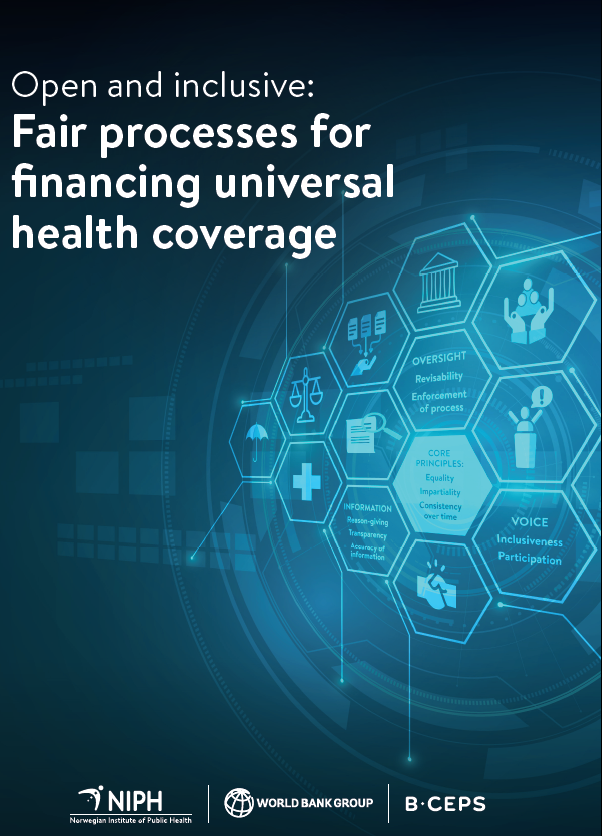
Publications Reports Open and Inclusive: Fair Processes for Financing Universal Health Coverage. Elina Dale, David B. Evans, Unni Gopinathan, Christoph Kurowski, Ole Frithjof Norheim, Trygve Ottersen and Alex Voorhoeve, (2023). The World Bank, Norwegian Institute of Public Health and the Bergen Center for Priority Setting. Difficult Trade-offs in Response to COVID-19: The Case for Open and Inclusive Decision-making. Ole Frithjof Norheim, Joelle Abi-Rached, Liam Kofi Bright, Kristsine Baeroe, Octavio Luiz Motta Ferraz, Siri Gloppen, and Alex Voorhoeve, (2020). World Health Organization and the OECD background paper for their policy document: Sustaining Lives and Livelihoods: A Decision Framework for Calibrating Social and Movement Measures During the COVID-19 Pandemic. Assessing the Well-being Impacts of the COVID-19 Pandemic and Three Policy Types: Suppression, Control and Uncontrolled Spread. Matthew Adler, Richard Bradley, Maddalena Feranna, Marc Fleurbaey, James Hammitt and Alex Voorhoeve. Policy Brief for the T20 (Thinktank 20, accompanying the G20) in Saudi Arabia (2020). Making Fair Choices on the Path to Universal Health Coverage: Final Report of the WHO Consultative Group on Equity and Universal Health Coverage. Trygve Ottersen, Ole F Norheim, Frehiwot Berhane, Bona Chitah, Richard Cookson, Norman Daniels, Nir Eyal, Walter Flores, Axel Gosseries, Daniel Hausman, Samia Hurst, Lydia Kapiriri, Toby Ord, Andreas Reis, Ritu Sadana, Carla Saenz, Shlomi Segall, Gita Sen, Tessa Tan-Torres Edejer, Alex Voorhoeve, Daniel Wikler, and Alicia Yamin. World Health Organization (2014). French translation (2015). Spanish translation (2015). Book Conversations on Ethics. Oxford University Press (2009). (UK) (US). First Simplified Chinese translation, Xinhua Press (2015). Second Chinese translation, with a new Preface, Shanghai Literature and Arts Publishing House (2025).
Journal articles and book chapters (English) The ethics of relying on research participants' altruism. Alex Voorhoeve, Aaron Segal, and David Wendler. Journal of Moral Philosophy, forthcoming. Do people better recognize inconsistencies in others’ moral judgments than their own? If so, why? Veronika Luptakova, Matteo Galizzi, Dario Krpan and Alex Voorhoeve. Philosophical Psychology, forthcoming. Precis of Open and Inclusive: Fair Processes for Financing Universal Health Coverage. Alex Voorhoeve, Elina Dale, and Unni Gopinathan. Health Economics, Policy and Law, 20.1 (2025): 4-8. Response to Critics of Open and Inclusive: Fair Processes for Financing Universal Health Coverage. Alex Voorhoeve, Elina Dale, and Unni Gopinathan. Health Economics, Policy and Law, 20.1(2025): 34-46.Criteria For the Fairness of Health Financing Decisions: A Scoping Review. Elina Dale, Elizabeth Peacocke, Espen Movik, Alex Voorhoeve, Trygve Ottersen, Christoph Kurowski, David B. Evans, Ole Frithjof Norheim, and Unni Gopinathan. Health Policy and Planning 38.1 (2023): i13-i35. Procedural Fairness and the Resilience of Health Financing Reforms in Ukraine. Yuriy Dzhygyr, Elina Dale, Alex Voorhoeve, Unni Gopinathan and Kateryna Maynzyuk. Health Policy and Planning, 38.1 (2023): i59-i72. How Do People Balance Death against Lesser Burdens? In M. Lindauer (ed.) Advances in Experimental Political Philosophy. Veronika Luptakova and Alex Voorhoeve. Bloomsbury, (2023): 123-158. How to Balance Lives and Livelihoods in a Pandemic. In J. Savulescu and D. Wilkinson (eds.) Pandemic Ethics: From Covid-19 to Disease X. Matthew Adler, Richard Bradley, Maddalena Ferranna, Marc Fleurbaey, James Hammitt, Remi Turquier, and Alex Voorhoeve. Oxford University Press (2023): 189-209.
The Pleasures of Tranquillity. Homo Oeconomicus, 39 (2022): 185-197.
Is the Organisation for Economic
Cooperation and Development's 2021 Tax Deal Fair? Tove Maria Ryding
and Alex Voorhoeve. LSE Public Policy Revie What Makes Personal Data Processing by Social Networking Sites Permissible? Lichelle Wolmarans and Alex Voorhoeve. Canadian Journal of Philosophy 52 (2022): 93-108. Policy Evaluation under Severe Uncertainty: A Cautious, Egalitarian Approach. In C. Heilmann and J. Reiss (eds.) The Routledge Handbook of Philosophy of Economics. Routledge (2021): 467-479. Equality for Prospective People: A Novel Statement and Defence, Utilitas, 33 (2021): 304-320. Difficult Trade-offs in Response to COVID-19: The Case for Open and Inclusive Decision-making. Ole Frithjof Norheim, Joelle Abi-Rached, Liam Kofi Bright, Kristine Baeroe, Octavio Luiz Motta Ferraz, Siri Gloppen, and Alex Voorhoeve, Nature Medicine 27 (2021): 10-13. Healthy Nails versus Long Lives: An Analysis of a Dutch Priority-Setting Proposal. In D. Schroeder, N. Eyal, S. Hurst and D. Wikler (eds.) Measuring the Global Burden of Disease: Philosophical Dimensions. Oxford University Press (2020): 273-92. Why Health-Related Inequalities Matter and which Ones Do. In Ole Frithjof Norheim, Ezekiel Emanuel, and Joseph Millum (eds.) Global Health Priority-Setting: Beyond Cost-Effectiveness. Oxford University Press (2019): 145-161. Have Reforms Reconciled Health Rights Litigation and Priority Setting in Costa Rica? Alessandro Luciano and Alex Voorhoeve. Health and Human Rights Journal 21:2 (2019): 283-293.
Similarity and the Trustworthiness of Distributive Judgments. Alex Voorhoeve, Arnaldur Stefansson, and Brian Wallace. Economics and Philosophy 35:3 (2019): 537-561.
Egalitarianism under Severe Uncertainty. Thomas Rowe and Alex Voorhoeve. Philosophy and Public Affairs 46:3 (2018): 239-268. Epicurus on Pleasure, a Complete Life, and Death: A Defence. Proceedings of the Aristotelian Society 118: 3 (2018): 225-253.
Equality versus Priority. Michael Otsuka and Alex Voorhoeve. In Serena Olsaretti (ed.) Oxford Handbook of Distributive Justice. Oxford University Press (2018): 65-85. Balancing Small against Large Burdens. Behavioural Public Policy 2:1 (2018): 125-142. May a Government Mandate More Comprehensive Health Insurance than Citizens Want for Themselves? Oxford Studies in Political Philosophy 4 (2018): 167-91. Making Fair Choices on the Path to Universal Health Coverage: Applying Principles to Difficult Cases. Alex Voorhoeve, Tessa TT Edejer, Lydia Kapiriri, Ole F Norheim, James Snowden, Olivier Basenya, Dorjsuren Bayarsaikhan, Ikram Chentaf, Nir Eyal, Amanda Folsom, Rozita Halina Tun Hussein, Cristian Morales, Florian Ostmann, Trygve Ottersen, Phusit Prakongsai, Carla Saenz, Karima Saleh, Angkana Sommanustweechai, Daniel Wikler, Afisah Zakariah. Health Systems and Reform 3:4 (2017): 1-12
Universal Health Coverage, Priority Setting and the Human Right to Health. Benedict Rumbold, Rachel Baker, Octavio Ferraz, Sarah Hawkes, Carleigh Krubiner, Peter Littlejohns, Ole Frithjof Norheim, Thomas Pegram, Annette Rid, Sridhar Venkatapuram, Alex Voorhoeve, Daniel Wang, Albert Weale, James Wilson, Alicia Ely Yamin, and Paul Hunt. The Lancet 390: 10095 (2017): 712-14. Why One Should Count only Claims with which One Can Sympathize. Public Health Ethics 10:2 (2017): 148-56.
Three Case Studies in Making Fair Choices on the Path to Universal Health Coverage. Alex Voorhoeve, Tessa TT Edejer, Lydia Kapiriri, Ole F Norheim, Olivier Basenya, Dorjsuren Bayarsaikhan, Ikram Chentaf, Nir Eyal, Amanda Folsom, Rozita Halina Tun Hussein, Cristian Morales, Florian Ostmann, Trygve Ottersen, Phusit Prakongsai, Carla Saenz, Karima Saleh, Angkana Sommanustweechai, James Snowden, Dan Wikler, Afisah Zakariah. Health and Human Rights Journal 18:2 (2016): 11-22. Ambiguity Attitudes, Framing, and Consistency. Alex Voorhoeve, Ken Binmore, Arnaldur Stefansson, and Lisa Stewart. Theory and Decision 81 (2016): 313-37.
Priority or Equality for Possible People? Alex Voorhoeve and Marc Fleurbaey. Ethics 126 (2016): 929-54.
Making Fair Choices on the Path to Universal Health Coverage: A Precis. Alex Voorhoeve, Ole Frithjof Norheim and Trygve Ottersen. Health Economics, Policy, and Law 11 (2016): 71-7. Response to Our Critics. Alex Voorhoeve, Trygve Ottersen and Ole Frithjof Norheim. Health Economics, Policy, and Law 11 (2016): 103-11. On the Social and Personal Value of Existence. Marc Fleurbaey and Alex Voorhoeve. In Iwao Hirose and Andrew Reisner (ed.) Weighing and Reasoning: Themes from the Work of John Broome. Oxford University Press (2015): 95-109. How Should We Aggregate Competing Claims? Ethics 125 (2014): 64-87.
Response to Rabin. In Adam Oliver (ed.), Behavioural Public Policy. Cambridge University Press (2013): 140-147. Vaulting Intuition: Temkin's Critique of Transitivity. (Critical Notice of Temkin's Rethinking the Good.) Economics and Philosophy, 29 (2013): 409-25. Decide as You Would with Full Information! An Argument against ex ante Pareto. Marc Fleurbaey and Alex Voorhoeve. In Nir Eyal, Samia Hurst, Ole Norheim, and Dan Wikler (eds.), Inequalities in Health: Concepts, Measures, and Ethics. Oxford University Press (2013), pp. 113-128.
How Much Ambiguity Aversion? Finding Indifferences Between Ellsberg's Risky and Ambiguous Bets. Ken Binmore, Lisa Stewart and Alex Voorhoeve. Journal of Risk and Uncertainty 45 (2012): 215-38.
Egalitarianism and the Separateness of Persons. Alex Voorhoeve and Marc Fleurbaey. Utilitas 24 (2012): 381-98.
Reply to Crisp. Michael Otsuka and Alex Voorhoeve. Utilitas 23 (2011): 109-14. Why It Matters that Some Are Worse Off Than Others: An Argument Against the Priority View. Michael Otsuka and Alex Voorhoeve. Philosophy & Public Affairs 37 (2009): 171-99.
Heuristics and Biases in a Purported Counterexample to the Acyclicity of "Better Than". Politics, Philosophy and Economics 7 (2008): 285-99.
Scanlon on Substantive Responsibility. Journal of Political Philosophy 16 (2008): 184-200.
Preference Change and Interpersonal Comparisons of Welfare. In Serena Olsaretti (ed.) Preferences and Well-Being. Royal Institute of Philosophy Supplement 59 (2006): 265-79. Transitivity, the Sorites Paradox, and Similarity-Based Decision-Making. Alex Voorhoeve and Ken Binmore. Erkenntnis 64:1 (2006): 101-14.
Incentives and Principles for Individuals in Rawls' Theory of Justice. Ethics & Economics 3 (2005): 1-7. Equality of Opportunity and Opportunity Dominance. Matthias Hild and Alex Voorhoeve. Economics and Philosophy 20 (2004): 117-45. Defending Transitivity Against Zeno's Paradox. Ken Binmore and Alex Voorhoeve. Philosophy & Public Affairs 31 (2003): 272-79.
Journal articles (Dutch) Prioriteit voor patienten met een lagere levenskwaliteit. (Priority for patients who are worse off.) Filosofie & Praktijk (Philosophy & Practice) 31 (2010): 40-51. Schuldverlichting: niet voor niets. (Debt relief: not for nothing.) Renske Oort and Alex Voorhoeve. Economisch-Statistische Berichten (Economic-Statistical Letters) 85 (2000): 141-43. Dollarisering gewenst? (Is dollarisation desirable?) Economisch-Statistische Berichten 84 (1999): 577-81.
Blog posts, reviews and short contributions to books, journals, and magazines Social Participation in Health Policy; A Key Component of Fair Decision-Making. Global Health Initiative blog (2025) What is Procedural Fairness in Health Financing? LSE Philosophy blog (2025). Why Is Procedural Fairness in Health Financing Valuable? LSE Philosophy blog (2025) Introduction.Studies in Philosophy, Politics and Economics 3:1 (2021): i-vi. Introduction. Studies in Philosophy, Politics and Economics 2:1 (2020): i-iii. Introduction. Studies in Philosophy, Politics and Economics 1:1 (2019): i-ii. Introduction to the Symposium on the Report of the International Panel on Social Progress (IPSP). With Alexander Raubo. Economics and Philosophy 34:3 (2018): 439-441. Review of Why Inequality Matters: Luck Egalitarianism, Its Meaning, and Value by Shlomi Segall. Notre Dame Philosophical Reviews March 2017. Introduction to the Symposium on Equality versus Priority. Economics and Philosophy 31 (2015): 201-02. Why Sore Throats Don't Aggregate, but Arms Do. Journal of Medical Ethics 41 (2015): 492-3.
Review of Well-Being and Fair Distribution: Beyond Cost-Benefit Analysis by Matthew W. Adler. Social Choice and Welfare 42:1 (2014): 245-54. Inequalities in HIV Care: Chances versus Outcomes. With Nir Eyal. The American Journal of Bioethics 11 (12) (2011): 42-4. Who Am I? Beyond "I Think, Therefore I Am". Alex Voorhoeve, Elie During, David Jopling, Timothy Wilson and Frances Kamm. Annals of the New York Academy of Sciences 1234 (2011): 134-48. Philippa Foot. The Philosophers' Magazine 52 (2011): 9.(In Russian) Can We Trust Our Intuitions? Esquire Russia 56 (2010): 48-54. [A translation by Ivan Bogantsev of an excerpt of chapter 3 of Conversations on Ethics.] Review of The Practice of Ethics by Hugh LaFollette. Social Choice and Welfare 34 (2010): 497-501. (In Russian) Peter Singer Interviewed. Esquire Russia 52 (2010): 82-9. [A translation by Ivan Bogantsev of an excerpt of chapter 2 of Conversations on Ethics.] Mill and Barry on the Foundations of Liberal Rights. Published in a shortened version as 'The Limits of Autonomy'. The Philosophers' Magazine 46 (2009): 78-82. The Price of Security. Catherine Audard, Tony McWalter, Saladin Meckled-Garcia, and Alex Voorhoeve. In What More Philosophers Think. Eds. J. Baggini and J. Stangroom Continuum (2007): 19-32. In Search of the Deep Structure of Morality. An Interview with Frances Kamm. Imprints 9:2 (2006): 93-117. [A revised version appears in Conversations on Ethics.] Is Poverty Our Problem? The Philosophers' Magazine 36 (2006): 46-9. (In Russian) Shockwave. With Mika Velikovskiy. Political Journal 27 (2005): 48-9. Review of Pursuing Equal Opportunities: The Theory and Practice of Egalitarian Justice by Lesley A. Jacobs. Economics and Philosophy 21 (2005): 155-61. A Mistrustful Animal: Bernard Williams Interviewed. The Harvard Review of Philosophy XII (2004): 81-92. [A revised version appears in Conversations on Ethics.] Erasmus in The Great Thinkers A-Z. Eds. Julian Baggini and Jeremy Stangroom, Continuum (2004): 91-3.
Rawls in The Great Thinkers A-Z. Eds. Julian Baggini and Jeremy Stangroom, Continuum (2004): 199-201. Harry Frankfurt on the Necessity of Love. Philosophical Writings 23 (2003): 55-70. [A revised version appears in Conversations on Ethics.] The House that Jack Built. The Philosophers' Magazine 22 (2003): 28-31. The Grammar of Goodness. An Interview with Philippa Foot. The Harvard Review of Philosophy XI (2003): 32-44. [A revised version appears in Conversations on Ethics.] The Good, the Right, and the Seemly. Ken Binmore Interviewed. The Philosophers' Magazine 21 (2002): 48-51. [A revised and expanded version appears in Conversations on Ethics.] Mandeville. The Philosophers' Magazine 20 (2002): 53. Review of The Philosophy of Science by A. Rosenberg. Philosophy Today 14 (2001): 8-9. Kant on the Cheap. Thomas Scanlon Interviewed. The Philosophers' Magazine 16 (2001): 29-30. [A revised and expanded version appears in Conversations on Ethics.] |